
Uncategorized

Uncategorized

SEO for Startups 2026: How to Rank Higher Without a Big Budget in 2026

SEO for Startups 2026. You can’t fool around on the Helpful Content System and AI-actually-powered search results of 2026; you have to deserve your rankings. For a brand-new business, this is simply not possible for big corporations. The silver lining is, however, that the laser-focused attention to actual expertise and user satisfaction by Google is the best low-cost SEO strategy for brand-new businesses. This ultimate guide will teach you exactly how your team’s unique set of expertise and speed can help your business perform powerful organic growth without spending much on marketing. Forget about investing in fancy tools and generic content; your most valuable resource is, actually, the authentic desire to help your customer. SEO for Startups 2026:Why SEO Is Critical for Startups Being a new business in 2026 with limited cash flow, every dollar has to make money right away. After a certain point, when the business ceases to spend money on advertising, it will stop making money. However, with Search Engine Optimization, as time passes and continues to go on, this traffic grows exponentially: they are able to consistently show up. SEO for Startups 2026: How Google Ranks New Businesses Today SEO for Startups 2026, Google’s algorithms, powered by the Helpful Content System and AI Overviews, focus on answering the user’s question completely from the most credible source. The Four Pillars of SEO for Startups 2026 E-E-A-T Today, the foundation of SEO is E-E-A-T, and this has become one of the major search parameters in a domain filled with AI-produced content. The AI Search Generative Experience (SGE) Google’s AI-generated answer summaries (SGE) often appear at the top of the search results page. To get cited in these summaries—which is essential for future visibility—your content must be: Proven Low-Budget SEO Strategies That Work Your time is your most valuable resource for your startups in 2026. Focus your efforts on high-leverage activities that rank your website’s compounding authority. 1. Free Keyword Research: The Long-Tail Goldmine Now, skip the expensive tool for now; SEO for Startups 2026, you have it all in Google to find affordable SEO strategies. 2. Content Clustering for Topical Authority If you want to rank in SEO for Startups 2026, instead of creating random blog posts, the quickest way to establish authority is through the creation of topical clusters, as the primary method of SEO advice for start-ups is to create topical clusters.  3. Ethical Backlink Strategies (No Spam Needed) Backlinks are “votes of confidence. In SEO for Startups 2026, relevance and trust count for a lot. You don’t need a big link budget. Content Strategy for Startups With Limited Resources SEO for Startups 2026: Your goal is quality over quantity. One perfect, authoritative guide is better than 10 generic, AI-assisted fluff pieces. Strategy Focus Old SEO Mindset (2023) Low-Budget SEO (2026) ROI & Rationale Goal Rank for a high-volume keyword. Satisfy the user’s exact need. Higher engagement, lower bounce rate, stronger E-E-A-T signals. Content Source Use AI to generate 1,500 words fast. Use first-hand experience and original insights. AI Overviews cite original sources; human experience builds trust. Formatting Write a wall of text with keywords. Short paragraphs, bullet points, custom images, jump links. Improved readability, better user experience (UX), higher time-on-page. Target Keyword “Best CRM” (High Competition) “Affordable CRM for non-profit fundraising” (Long-Tail) Faster ranking, lower competition, higher conversion rate. Technical SEO on a Startup Budget The foundation of Technical SEO must be solid for you to reach the largest audience possible with your website traffic. Most technical issues can be resolved with a proper installation. If you’re focusing on Core Web Vitals, then SPEED will be a big part of SEO for Startups 2026. Common SEO Mistakes New Businesses Must Avoid Don’t waste your limited resources on tactics that will either fail or earn a penalty. Best Free SEO Tools for Startups (2026 Edition) You don’t need Ahrefs or SEMrush yet. These tools provide all the data a lean startup needs for organic growth. Tool Name Core Function SEO Benefit Google Search Console (GSC) Site performance and error reporting. Shows the exact keywords you already rank for and technical errors to fix. Google Analytics 4 (GA4) User behavior tracking (time-on-page, bounce rate). Measures user satisfaction—a key ranking signal. Google Keyword Planner Basic keyword volume and competition. Finds initial seed keywords and volume estimates for your long-tail phrases. PageSpeed Insights Website speed and Core Web Vitals audit. Provides actionable steps to fix the technical foundation of your site. AnswerThePublic (Free Tier) Question-based keyword ideas. Perfect for generating schema-friendly FAQ sections and H2/H3 headings. Yoast/Rank Math (WordPress Plugin) On-page SEO guidance and schema implementation. Simplifies on-page optimization for non-technical users. How Long SEO Takes for New Businesses to Rank in 2026(Realistic Timeline) SEO takes time. Learning to control expectation can be an antidote to burnout.  Actionable Startup SEO Checklist (Printable) Keep on track of your SEO marketing budget for the next six months by using this checklist: FAQ Section (Schema-Friendly) Q: Is AI content helpful for SEO for Startups 2026? A: While the generated content from AI is well-suited for the purposes of outlining, research, and the initial draft, it has not got the capability to offer the first-hand Experience or Expertise in the field that is currently expected by Google. AI should therefore only assist you in the development of content, and this content should then necessarily go through the editing and validation processes by a human. Q: How can I, on a limited budget, compete against highly authoritative domains? A: You do not compete on general or high-volume terms. You compete on specificity and E-E-A-T. You compete on ultra-specific, long-tail terms that your enterprise-level competitors are not focusing on. By offering the best, most experienced answer to a specific question, you will rank higher than they do for that question. Q: What should I focus on regarding SEO or Paid Ads for my new business? A: If you are looking for sustained growth and becoming a thought leader in your space, I would emphasis

PPC AGENCY
Uncategorized

Pay Per Click Agency – The Complete Guide for 2025

1. Introduction: Why Your Website Needs a Pay-Per-Click Agency  Hey there! If you’re trying to figure out the online advertising world, you’ve probably heard about PPC. It stands for Pay Per Click, and it’s a smart way to promote your business and be seen by people who are already looking for something similar to your business. Unlike traditional ads, you only pay when someone actually clicks on your ad. In 2025, with AI and automation making the digital landscape complex, just putting up an ad isn’t enough. You need a smart strategy. That’s why so many businesses are choosing to hire a pay-per-click agency. These experts know all the tricks to make sure every penny you spend brings in customers. They manage the complicated ad platforms so you can focus on running your business. Let’s dive in and see how they can help you win online! 2. What is a Pay Per Click Agency? Now, what is a pay-per-click agency? In a nutshell, it is an army of experts whose job is to keep your online ads in check and pay you whenever there is a click. It is your personal digital marketing department that specializes in maximizing the benefits from your paid advertising. Suppose you sell customized sneakers. You want people searching for “best handmade sneakers” to see your ad. Along comes a pay-per-click advertising agency and does it all: identifies the optimal keywords, writes the ad copy, and runs campaigns on platforms like Google Ads. Their mission is to provide you with as many conversions—a sale or whatever the desired outcome—for as little money as possible. They are the pros in the pay-per-click advertising firm business, meaning your money is invested wisely and efficiently. 3. What does a PPC agency do? A pay-per-click agency is a heavy lifter. It is a full-time job, really—one that requires constant attention and smart thinking. Here’s a breakdown of their main tasks: Keyword Research: They find the ‘exact words and phrases your customers are using,’ focusing on high-value keywords that deliver results without breaking the bank. • Ad creation and management: They create compelling headlines and descriptions along with designing visuals that look great on every device to make for high click-through rates. • Campaign Optimization: This is essential. They are always adjusting and testing everything, from ad scheduling and bid adjustments to new ad copies, to deliver improved results with time. • Budget Control: They take care of your ad spends by setting limits and adjusting the bids accordingly to give you maximum ROI, hence preventing budget overruns. Analytics and Reporting: They monitor key metrics such as impressions, clicks, and conversions and report these complicated data in simple, understandable terms so you understand exactly what is going on with your campaigns. 4. Benefits of Hiring a PPC Agency Why hire an electrician when you could try it yourself? The advantages are clear: •Saves Time and Money: Managing PPC is a huge time commitment. Outsourcing frees up your time. In addition, their expertise can save you money by making your ad spend much more efficient and avoiding costly mistakes. • Access to Experts and Premium Tools: They are PPC specialists; thus they use expensive premium tools and software to find the best keywords and to track the performance with incredible detail to give your website that extra edge. • Better ROI: Since they are experts in this pay-per-click industry, they know how to make the most of your every click. They will focus on the profitable clicks that bring in sales and hence give a good ROI. Real-Time Tracking and Performance: You will get clear, real-time reports. You don’t have to guess if your ads are working; you’ll see the numbers that show exactly what’s happening with your campaigns. 5. Types of PPC Agencies Not all PPC agencies are equal, and your selection depends upon your business needs. Specialized PPC Agencies: These agencies specialize in just one particular thing, such as only Google Ads or e-commerce ads. They are ideal for very specific needs. •Full-Service Digital Marketing Agencies: If you want one team to manage all of your online marketing seamlessly, these agencies handle everything, from SEO through social media, email, and PPC. AI-Based PPC Management Tools: Though not a classic agency example, these tools automate the management. The agencies may use such tools, but using them directly requires an expert human guide in implementing strategies. 6. How PPC Advertising Works Here’s the step-by-step process of how PPC works in a matter of seconds: 1. The Search: The user submits a query in a search engine, such as “best coffee maker”. 2. The Auction: The search engine runs a super-fast auction. Advertisers compete against one another, factoring in their bid and the quality of their Quality Score. 3. Ad Display: The winning ad appears at the top of the search results. 4. Click and Payment: Upon clicking, the user is taken to your website, and you pay the search engine a small fee—that’s the “Pay Per Click.” A Simple Real-Life Example: A small bakery hires a pay-per-click agency. The agency targets “order cookies online.” A user searches, clicks the ad (at a cost of $0.50 to the bakery), and buys $20 of cookies. The agency helps the bakery find those profitable clicks. 7. Best PPC Ad Networks A PPC agency works across several platforms to ensure that your message is everywhere your customers are: • Google Ads: the largest platform, covering search ads, display ads, and YouTube video ads. • Facebook & Instagram Ads: Great for targeting people based on interests and demographics, even if they are not actively searching yet. LinkedIn Ads: perfect for B2B companies targeting professionals and decision-makers. Bing Ads (Microsoft Advertising): An essential outlet for reaching an older, more established audience. •YouTube Ads: The necessity of capturing attention through short, engaging video content. Choosing the right PPC agency is a big decision. Here are the key qualities to look for: • Portfolio & Experience: Ask to see

Uncategorized

How to Do SEO for Beginners Step by Step: Your 2025 Guide to Ranking Higher

Introduction: Demystifying SEO for Your Online Success Chapter 1: Understanding the SEO Landscape in 2025 Chapter 2: Laying the Foundation — Essential First Steps for New Websites Chapter 3: Mastering On-Page SEO — Your Content’s Best Friend Chapter 4: Beyond the Basics — Technical SEO and Off-Page Strategies Chapter 5: Essential Free SEO Tools for Beginners (2025 Edition) Conclusion: Your Journey to SEO Success Begins Now Frequently Asked Questions (FAQ) Introduction: Demystifying SEO for Your Online Success results? Ever ask yourself how some websites always rank number one in Google’s search results? It isn’t any kind of magic, it’s Search Engine Optimization ! If you are a beginner looking to build an online presence for your business, know that understanding SEO is your secret weapon. With the future of search changing rapidly, so have the strategies that accompany the changes. However, the basics around which SEO has operated still remains the same: provide value, be user friendly, help search engines determine what you’re about, and I’m here to help you every step of the way; even if I have to eliminate the jargon first, so that we can focus on the strategies for actionable content that is useful to your website. Chapter 1: Understanding the SEO Landscape in 2025 What is SEO, Really? Essentially, Search Engine Optimization involves optimizing your website or web pages to achieve desirable placement in the search engines results pages (SERPs), such as Google.  SEO is about making your website visible when an audience is looking for information that is relevant to your business.  In other words, SEO is aimed at getting organic (non-paid) traffic to your site. In 2025 SEO is about creating a remarkable user experience and delivering content that is valuable, fulfills the needs of your audience and answers questions without the need for tricks. SEO is not a short term strategy like advertising, it is primarily about building authority and trust over time. Why SEO Matters More Than Ever for Beginners With a new website, it is hard to know where to start. The good news about Search Engine Optimization is that the playing field is level for a new website. First, a sound Search Engine Optimization plan that is beginner friendly will help you gain traction. There are billions of people still using the internet to search for anything and everything . This is an opportunity greater than what we could have imagined! Without SEO, even the best content will never see the light of day, and the evidence suggests that “96.55% of web pages get zero traffic from Google” [3], and there is a reason for that. By using some of the basic principles of SEO from day one you are constructing a pathway for your audience to get to you. Key Search Engine Optimization Trends to Watch in 2025 SEO is constantly changing.  Here are a few-game changes you can expect in 2025:   • The Rise of AI in Search:  The use of AI will change how search engines comprehend and present information to users. Content must be helpful, comprehensive and relevant to the context of the user to fulfill complex AI questions. • Zero-Click Searches:  Users are increasingly finding answers to their questions directly on the search engine results page (SERP).To delight your audience or “win” you will provide service type or short-answer content that might show up in a featured snippet or knowledge panel [2]. • User-First Search Engine Optimization & E-E-A-T:  As it relates to search engines like Google, E-E-A-T, explains its desire for content that highlights Experience, Expertise, Authoritativeness and Trustworthiness.  Focus on creating original, high quality content that helps the user and establishes expertise. • Conversational Keywords and Voice Search:  Used to be optimized for long, conversational keywords with the rise of voice search. Think of how people would say their question out loud. • Topical Authority:  Build authority across a topic area by creating content as “clusters” (interconnected content signaling to search engines you are an authority) around subjects. This all hinges on the idea of quality, user experience, and comprehensive content – all things a beginner can focus on to create a strong platform. Chapter 2: Laying the Foundation: Essential First Steps for New Websites Creating an entirely new website starts with a strong Search Engine Optimization foundation. Choosing the best options early on is critical to help ensure that your website can be found and is set up to grow over time. Choosing the Right Domain and Hosting Your domain name is your website’s address on the Internet. It is best to choose a domain name that relates to your brand, is easy to remember, and easy to type in. Make sure to choose a reputable Top-Level Domain (TLD) like .com. Your web hosting company stores your website’s files. A good web host provides speed, security, and uptime, which are all critical for SEO and the user’s experience. Look for a reliable host, fast server response time, security, and scalability. Setting Up Your Website for SEO Success (WordPress Focus) WordPress is a popular Content Management System (CMS) that is SEO-friendly to a degree. For WordPress users, there are a few initial Search Engine Optimization settings to perform. 1 Check Your Site Visibility Settings: Within WordPress, confirm that “Discourage search engines from indexing this site” is unchecked in Settings > Reading [5]. 2 Have an SEO-Friendly URL Structure: Set Settings > Permalinks to “Post name” so that it results in clean, descriptive URLs [5]. 3 Choose WWW or Non-WWW: After choosing an option (www.yourwebsite.com (for example) or yourwebsite.com), stick with the same [5]. 4 Install an SEO Plugin: Additionally, you will want to install an Search Engine Optimization Plugin (note: there are many options, so choose based on your needs and skills/knowledge). They, such as All in One SEO (AIOSEO) or Yoast SEO, can automate a lot of technical work for you, besides they also aid in On-page optimization in addition to create XML sitemaps [5]. The Importance of Google Search Console and Analytics •Google Search Console (GSC):  Your link to Google! Inform Google how

Uncategorized

What is Digital Marketing

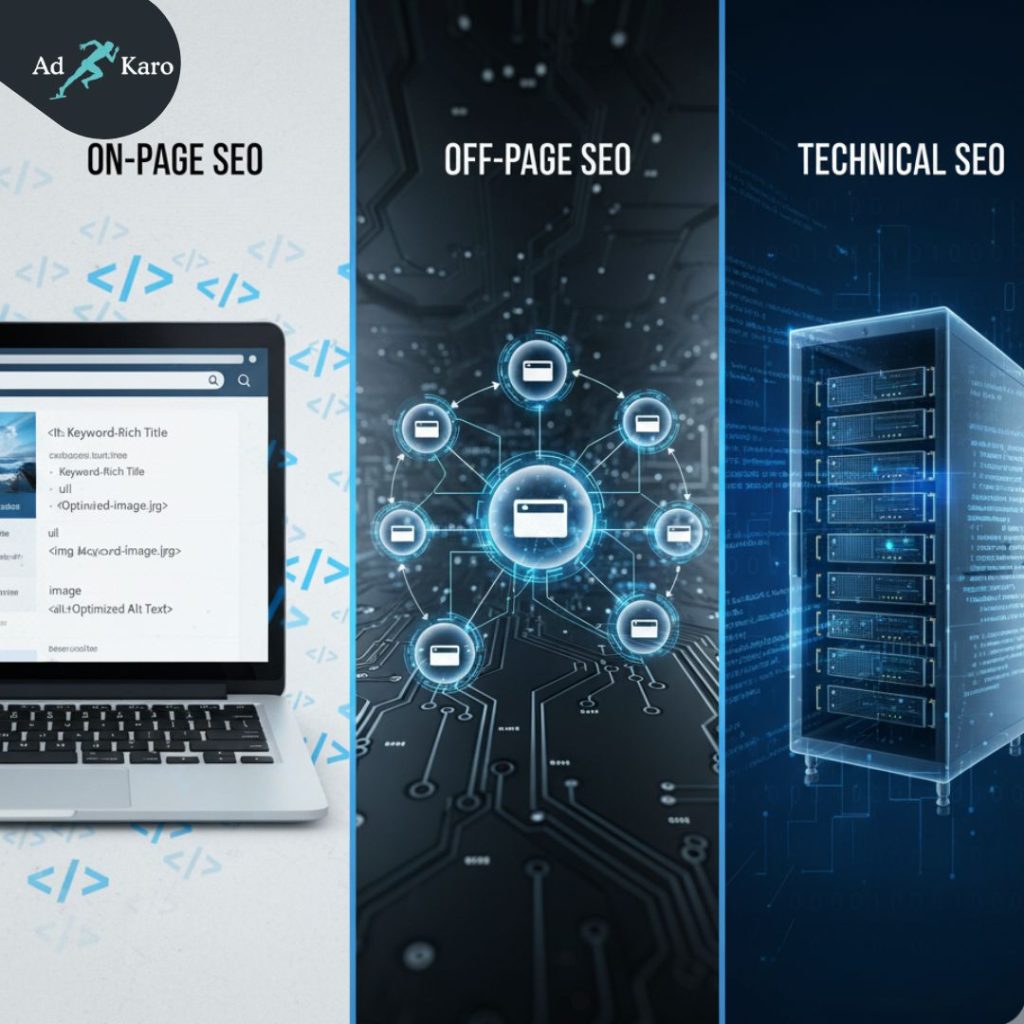
1. Foundations 1.1 What is Digital Marketing? This refers to the planned utilization of online channels to advertise brands, offerings, and services. It is about identifying potential customers online; utilizing websites, search engines, social media, emails, sites/apps at mobile platforms, while also developing data-driven tactics to engage users and measure their engagement in order to meet company objectives. 1.2 Digital versus Traditional versus Online Marketing Digital Marketing is all-encompassing of digital media, even traditional offline digital media (such as SMS and digital billboards). Online Marketing is a subset of digital marketing, used to define marketing activities/interactions strictly based on internet mediums (like search engine marketing – SEO/Social). Traditional Marketing utilizes non-digital channels (such as television, print, or radio). Traditional marketing channels tend to have a wider reach, but less targeted and measurable realms of activity. 1.3 B2B vs. B2C Strategies B2B (Business-to-Business) strategies focus on building long-term relationships through logic, value propositions, and lead nurturing (e.g., LinkedIn, whitepapers). B2C (Business-to-Consumer) strategies often target immediate purchases by appealing to emotions, trends, and personal benefits via platforms like Instagram and TikTok.What is digital marketing knowledge helps tailor these strategies effectively. 1.4 What is the Benefits & Challenges of Digital marketing Benefits: Global reach, precise targeting, cost-effectiveness, and highly measurable results. Challenges: Constant algorithm changes, high competition, data privacy concerns, and the need for specialized, ever-evolving skills to stay effective.Companies that understand what is digital marketing can better navigate these challenges. 1.5 Key Regulations (GDPR, CCPA, DSA) Key regulations like GDPR (EU), CCPA (California), and the DSA (EU) govern data privacy, user consent, and platform accountability, ensuring transparent and ethical digital marketing practices. 2. Core Approaches 2.1 Creating Brand Awareness Such a tactic is targeted at getting the brand to be identified and acknowledged. Among these things would be SEO (search engine optimization), social media campaigns, and content such as widespread, which all aim at increasing the visibility and familiarity of your brand within a target audience.This is a practical application of what is digital marketing. 2.2 Inbound Marketing vs Outbound Marketing Content marketing, blogging, SEO, and other methods of inbound marketing are used to attract customers. Outbound marketing tries to reach a large audience with the help of interruptive methods such as cold calling and display advertising to deliver the marketing message. 2.3 Omnichannel Marketing The goal of the omnichannel model is to create one seamless customer experience across all the channels and devices, whether they are online, in-app, or in-store. The whole point is that you can have the same messaging and customer interaction no matter which channel you use. 2.4 Marketing Automation Marketing automation is basically a marketing science that comes with a software solution that automates all the repetitive tasks, e.g., email campaigns, social media postings, and so on. Marketing automation allows companies to achieve high efficiency in tasks that are repeatable and, at the same time, helps them to nurture their leads by providing them with the right content in the right time and making it feel more personal, but at a large scale.This is a key component of what is digital marketing. 2.5 Personalization and Targeting The main aim of personalization and targeting is to use the available data about customers in order to provide the right message and the right offer to the right people among the consumers. Personalization and targeting have moved a step further than merely generic ads where if a customer is using some digital platform, he/she might be shown ads of the products or services to which that customer fits via the tailored experiences to make him/her interact more and buy. What is digital marketing Channels 3.1 Owned Media Content Marketing Content marketing is the creation and distribution of valuable, relevant content (blogs, videos, infographics) to attract and retain a defined audience. The main objective is to establish trust and authority, which in turn will lead to the landing of customer actions that are profitable, but without direct selling. SEO (On-Page, Off-Page, Technical) Making a website more visible is the goal of achieving a higher ranking in organic search results. On-Page: Content/keyword usage. Off-Page: Getting backlinks for authority. Technical: Speed and mobile-friendliness. When combined, they raise the visibility that is not paid for.Understanding what is digital marketing ensures proper SEO implementation. Email Marketing Building and maintaining relationships with prospects and customers through emails. The main activities are sending newsletters, promotional offers, and automated sequences, all of which are aimed at engaging, retaining, and converting the audience that has subscribed. Website & Blogging The owned brand’s digital and central hub. While the website is delivering the core information and the key conversion points, a blog is supporting it with the new, SEO-driven content that attracts the visitors and is the industry expertise. 3.2 Paid Media SEM & PPC Search Engine Marketing is basically Pay, Per, Click advertising. Advertisers make bids to have their ads displayed on the search engine results pages, thus, they only pay a small fee when the ad is clicked. It allows the instant, targeted visitors.SEM & PPC are integral components of what is digital marketing. Display Advertising These are banner or visual advertisements that appear on third, party websites that are part of an ad network. They implement demographic, geographic, and behavioral targeting for general brand awareness and retargeting to attract those visitors that have already visited the website.Display advertising is another tactic used in what is digital marketing. Native Advertising These are paid advertisements that adopt the look, feel, and function of the media format in which they appear. They are less intrusive as they are designed to merge with the user's organic content, thus providing a less disruptive user experience (e.g., sponsored articles). Affiliate Marketing It is a performance-based model whereby a business gives external partners (affiliates) a certain sum as a commission for every visitor or customer that has been brought in by the affiliate’s own marketing activities. It allows sharing of the risk and expanding the coverage.Affiliate marketing is often used in what is

Scroll to Top